Claudity - a thinking partner for Claude Code
side-projectsagentsclaude-codeai
I’ve spent the past few days building Claudity, a Claude Code plugin that acts as a thinking partner while you build: it asks the questions an architect would ask, pushes back on the ones you haven’t thought about, and records the answers and decisions as markdown in your repo.
On Tuesday I attended the Microsoft AEGIS AI Safety & Security summit, where I was introduced to Clarity Agent, Microsoft’s take on exactly this problem. It sits beside you while you’re instructing a model to build something and makes sure the architecture, the security posture, and the unglamorous engineering practices get considered before the code exists. A lot of what was shared landed for me, and my primary harness is Claude Code, so the obvious way to find out whether the ideas hold up was to get them running there. Claudity is that port.
Mechanically it’s six skills, six specialist “thinker” subagents that brainstorm failure modes in parallel (security, human factors, adversarial misuse, and so on), and a small dependency-free MCP server. The port stays honest through automation rather than discipline. A nightly job watches Microsoft’s repo and opens an issue whenever a release touches the vendored files, and a CI audit verifies that every line I’ve changed from upstream traces back to a written porting rule.
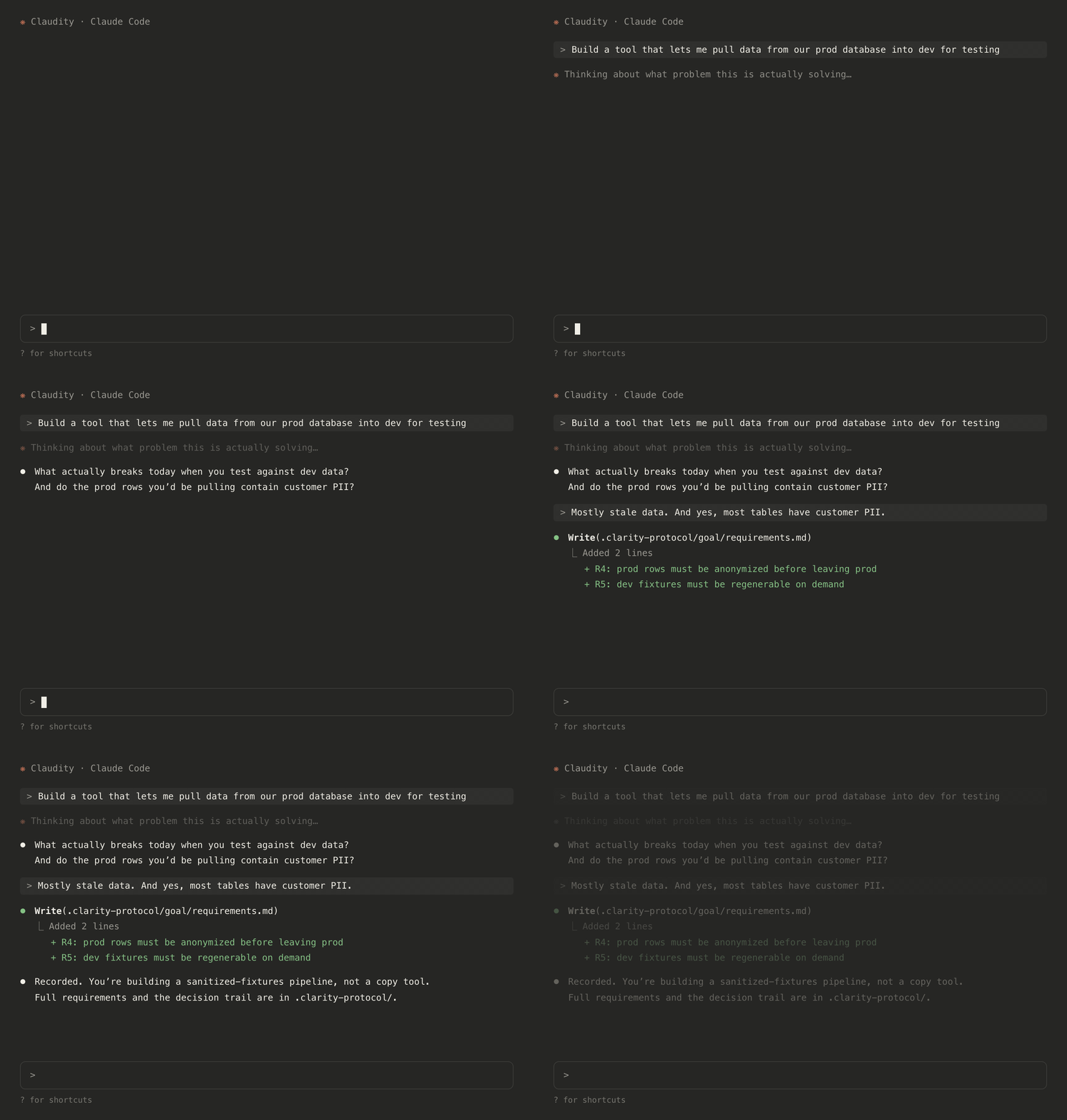
The GIF above shows the shape of it. Ask for a tool that pulls production data into dev, and before anything gets built the first question back is what’s actually breaking today, and the second is whether those rows contain customer PII. That’s what a good senior engineer raises in design review, and what nobody raises at 11pm in a terminal. The answers don’t vanish into chat scrollback either. They land in a .clarity-protocol/ directory as plain markdown, versioned and reviewable in the same PR as the code they shaped.
The code is at github.com/danielrmay/claudity, MIT licensed like its upstream counterpart. If you live in Claude Code, trying it is two commands, /plugin marketplace add danielrmay/claudity and then /plugin install claudity@claudity. Point it at the next thing you build and see what it asks you.
There’s more to say. I have opinions about the instructions themselves, where the prompts are strong and where they fight Claude Code’s own instincts, and after a few weeks of real miles I’ll know whether it earns its seat in the loop. Those are their own posts.